
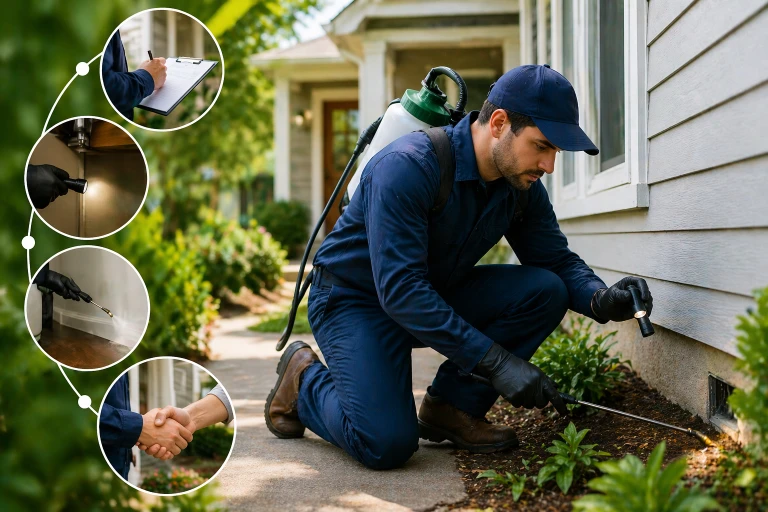
Professional pest control service procedure is considered the most efficient way to guard yourself against all kinds of insects that pose a threat to human health, spoil your property and create great discomfort. For some people booking pest control services is an intimidating process because not everyone knows all details about what happens during the entire pest control process. Here is the description of all stages of pest control procedures so you can learn everything about it, be prepared for it and enjoy a thorough work done by a specialist.
Here is all you need to know when dealing with termites, bedbugs, rodents or cockroaches.
Step 1: Scheduling and Pre-Visit Communication
However, even before the technician is able to reach your home, certain preparations have to be taken care of. These would simply consist of a phone call and booking on their website. A number of questions they might ask while you are booking would be the kind of pests affecting your property, the duration it has been occurring, affected areas, and whether or not you have pets and kids.
This will definitely make it easier for them to determine the type of technician you will require. Moreover, you will find it easier to decide whether they should send the general pest control technicians or get ready for something more complicated, such as termites and bed bugs.
In some companies, you will be given a list of questions to answer before they arrive for the service appointment. This will greatly help in making your experience worth your while.
Step 2: The Pest Control Inspection Process
Once the technician gets there, their primary objective is conducting a proper inspection of the premises. This forms the basis of all aspects of professional pest control service processes. The duration that takes to conduct a proper inspection varies depending on the extent of infestation in the property.
While inspecting for pest control, the pest control technician inspects both the exterior and interior parts of the house. In terms of the exterior inspection, the pest inspector looks for cracks within the foundation, gaps in utility services, broken window screens, wood-soil contact and possible pest access areas. For the interior inspection, they look in places such as behind appliances, underneath sinks, within cabinets, baseboards, attics, crawlspace and plumbing area.
The pest inspector is trained to recognize signs of infestation that even the homeowner may not see. Such include fecal matter, molting skins, gnawed marks, termite mud tubes, cockroach egg case, and rodent urine and droppings stains. Through such inspections, the pest technician recognizes which type of pest, the degree of infestation and the parts to be treated.
Step 3: The Treatment Plan and Explanation
The technician will take time to discuss the details gathered from the inspection with you after the inspection is completed. Here, at this point, you can raise queries about the inspection process. This means that this is the one thing that any pest control company does not want; you being in a rush at this stage of the process.
At this stage, the technician will explain to you the processes and procedures that will be followed to eliminate the pests, including the area that will be covered in the process and when you should expect the results. Also, if you had not been instructed on how to prepare before the visit, you will learn about it now.
Every species of pests requires a distinct treatment method for its elimination, meaning that different species need different treatments. For instance, the treatment of cockroaches is entirely different from the treatment of termites or even bed bugs.
For identification of your pest, visit BugsnPests website.
Step 4: Pest Control Preparation Checklist
Among other critical elements of the pest control professional service process, an aspect that stands out in ensuring successful results is preparation prior to application. This ensures effective results and safety for your family and pets.
Below is a checklist of actions usually asked for by most pest control firms:
Interior preparation generally includes:
-
Removing pets, their food and water from treated rooms
-
Protecting all food items and crockery by covering or storing them
-
Clearing out all items on countertops and floors in kitchen and bathrooms
-
Moving away any appliances from walls, if possible
-
Covering up the fish tank and turning off the air pump
-
Leaving the house for two to four hours as suggested by the technician
For termite treatment:
-
Clear furniture and belongings away from the walls in affected rooms
-
Allow access to all crawl spaces, attics, and the garage
-
Move items stored along the exterior perimeter of the home
For bed bug treatment:
-
Wash and bag all bedding, clothing, and soft items
-
Remove all items from under the bed
-
Do not move infested furniture to other rooms as this spreads the infestation
For Rodent Control:
-
Place all food in sealed containers.
-
Eliminate any clutter from corners and other storage places where rodents can hide.
Not following the pest control preparation checklist will be at your own risk, as it is mandatory to follow.
Step 5: How Pest Control Works During Treatment
Once preparation is complete and the technician is ready to begin, the home pest treatment procedure starts. The methods used will depend on what the inspection revealed and what pest is being targeted.
Common pest control treatment methods include:
Once the process of preparation for inspection is over, the process of home pest elimination will start depending on the results of the inspection. It will depend on the type of pests you find during the inspection.
Home pest removal procedures include:
Using sprays: The process will entail spraying of chemicals in the base boards, entrance areas as well as the perimeter of your house. It will create a barrier that kills the pest once it comes into contact with it.
Using gel baits: They can be applied to ants and cockroaches. Tiny amounts of gel are placed in the cracks which the pests use to enter. The insects feed on it and transfer it to other insects back in their nests.
Using dusting: It entails putting the powder in wall voids and attics where the pests live, especially those living in small and dry areas like cockroaches and bedbugs.
Granules: Granules are spread outside to eliminate the ground pests like fleas and ants.
Using baits: They are set on bait stations to eliminate rodents and termites.
Heat treatment: If the pests happen to be bed bugs, heat will be applied to the premises to kill bedbug larvae.
How Long Does Pest Control Take?
The time it will take to complete the pest control activities is among the frequently raised queries regarding pest control. The actual fact is that the duration of each activity will depend on the nature of the job.
For instance, the time taken to carry out the basic quarter pest control service for insects such as ants, spiders, and cockroaches should not exceed an hour. Bed bug inspections and treatments will take anywhere from a few hours. Termite inspections for bigger houses with crawl spaces will require around two hours. The fumigation activity will take up to 24 to 72 hours since the occupants should vacate their residences.
Pest Control Safety Precautions During and After Treatment
Pest control products are made to kill insects, yet that doesn't necessarily mean that there isn't any risk involved in applying them incorrectly or if the exposure takes place before the pest control product dries up. Knowing the measures required to use pest control products safely ensures the safety of your family and helps optimize the process.
During pest control application:
-
Keep children and pets away from the areas where the product was applied
-
Avoid touching anything that was recently sprayed with the pest control product
-
Ventilate the house after application if advised by the licensed technician
After the application:
Do not go back into the house until the prescribed re-entry time expires, typically 2-4 hours following the liquid pest control product application
-
Clean all kitchen counter surfaces prior to cooking meals
-
Keep pets away from wet surfaces
-
Don't vacuum or scrub wet pest control surfaces for a week since it removes the residual barrier
The re-entry time isn't optional. The licensed technician will give you an accurate re-entry time depending on the specific pest control products he/she uses.
Step 6: What to Do After Pest Control Service
However, it does not end here once the pest control visits are over. It is crucial to understand what should be done post pest control to make sure that the results you have obtained are satisfactory without having inadvertently undone everything.
What should be done after pest control?
-
Wait before entering the treated rooms according to the stated time for re-entry
-
Avoid cleaning the areas of the treated rooms through sweeping, mopping, and vacuuming for at least a week
-
Maintain the integrity of the bait stations and traps
-
Maintain cleanliness inside the house as much as possible
Days to weeks after the process:
-
An increase in the number of pests immediately following treatment is normal as the treatment will drive them from their hiding places.
-
Inspect the area thoroughly and call the pest control company if necessary
-
In case of a severe pest infestation, further visits will be scheduled
Before and After Pest Control Service: What Changes
An increase in improvement of your environment would already be noticeable within just two weeks of being under pest control management. The number of pests that will be present in your premises will definitely reduce, especially pests such as ants, cockroaches, and spiders. The rodents will also start slowing down since they will become bait.
However, in the case of bedbugs, it would take much longer since they tend to become one of the hardest pests to get rid of. This is because heat treatment and repeated treatments using chemicals need to be made every two weeks to disrupt their reproductive process.
This goes both to patience and prevention. Now that everything is taken care of, what is left to do now is to remain clean, sealed up, dried out, and keep your pest control appointments.
Residential Pest Control Services: Choosing the Right Company
Not all service providers for pest management are alike. In selecting an appropriate service provider for offering you pest control in your private property, ensure that the company has legal licenses in carrying out the business within your state and uses chemicals that have been certified by the Environmental Protection Agency (EPA).
Find out if the company is following the principle of integrated pest management (IPM). The process will ensure that there will be minimal use of chemicals and the attainment of the desired results. It is especially necessary when your family members include children and the elderly whose lungs might be affected.
It is improper for the company to make you sign a contract without discussing it properly.
FAQs About the Professional Pest Control Service Process
How often should I schedule professional pest control visits?
Most pest control experts recommend quarterly visits for general pest prevention. If you have a specific infestation such as termites or bed bugs, the company will set a treatment schedule based on the severity of the problem.
Is it safe to be home during pest control treatment?
For most interior spray treatments, residents and pets should leave the home for at least two to four hours. Your technician will tell you the exact re-entry time based on what products were used.
Will one treatment be enough to eliminate the problem?
It depends on the pest. One treatment is often sufficient for minor ant or spider problems. Cockroaches, bed bugs, rodents, and termites typically require multiple treatments or ongoing monitoring.
What pests does a general pest control treatment cover?
Most general pest control treatments target ants, cockroaches, spiders, silverfish, and some types of beetles. Termites, bed bugs, rodents, and mosquitoes are typically handled through separate, specialized services.
Will I need to throw away food or furniture before treatment?
For most treatments, food simply needs to be covered or stored in sealed containers. Furniture is only removed or bagged in extreme cases such as heavy bed bug infestations. Your technician will advise you based on your specific situation.
How do I know if the treatment is working?
Increased pest activity in the first few days after treatment is actually a sign it is working. You should see a steady decline in activity within one to two weeks. If activity continues beyond that, contact your pest control provider for a follow-up inspection.
Can I do anything to prepare my home between visits?
Yes. Seal cracks and gaps around windows, doors, and pipes. Fix leaky faucets and eliminate standing water. Keep food in airtight containers. Reduce clutter in storage areas. These steps significantly reduce the chance of pests returning between professional visits.
